Funding a Crypto Casino from Chile or Mexico
How players in Chile and Mexico turn pesos into USDT or Bitcoin, which networks cost less, what withdrawals really take, and the ID checks to expect.
 Maya Tan··6 min read
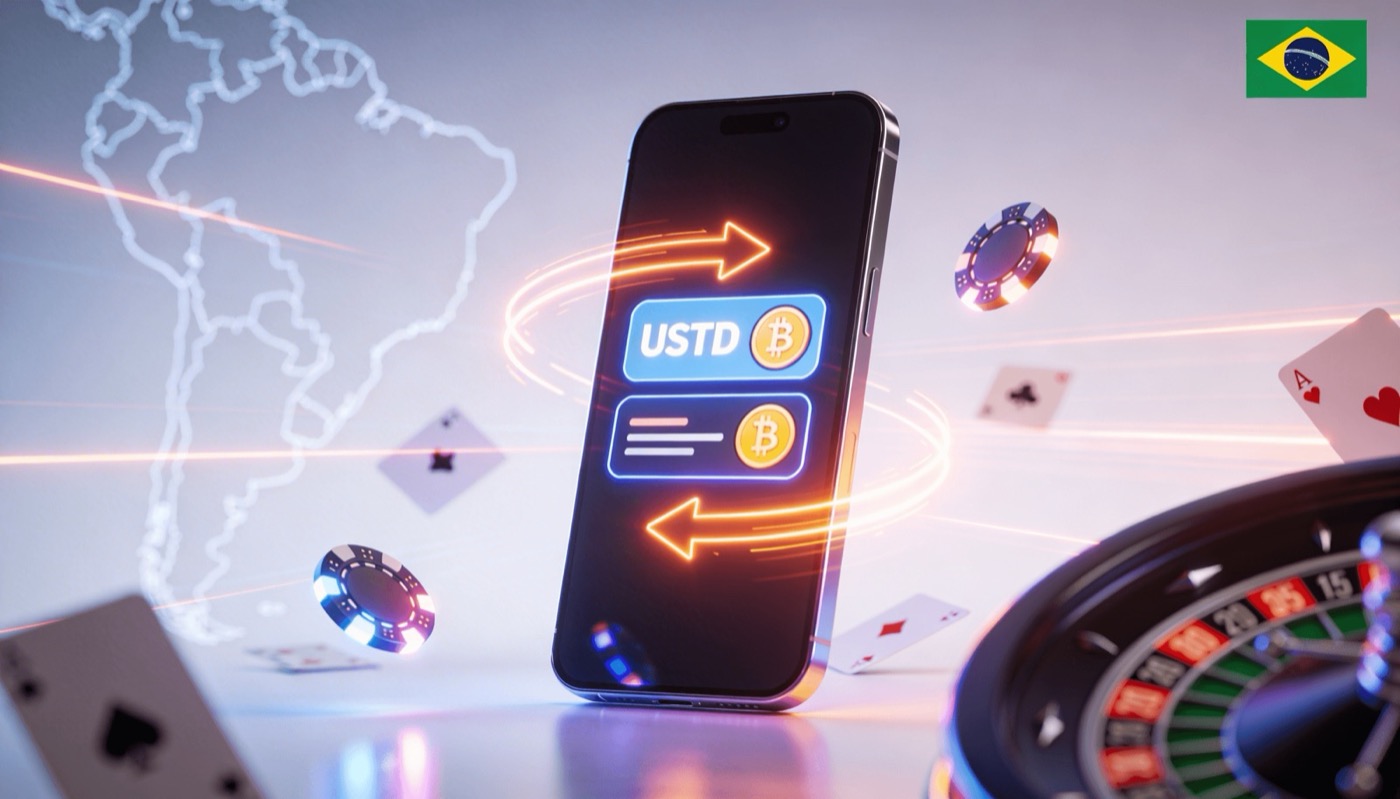
If you live in Chile or Mexico and want to play at an offshore casino, your bank card is usually the wrong tool. Many issuers decline gambling merchants, and most international sites do not hold CLP or MXN balances anyway. That is why crypto became the default rail for players here. This guide walks through the whole trip: pesos to exchange, exchange to casino, casino back to your bank account. It also covers the parts most promotional articles skip, such as identity checks at withdrawal and what the law currently says.
Why crypto is the common route
Latin America is already a heavy crypto region. Chainalysis counted close to 1.5 trillion dollars in crypto transaction volume across the region between July 2022 and June 2025. Mexico was the third largest market with 71.2 billion dollars received, and Chile recorded 23.8 billion. Around 64 percent of regional activity ran through centralized exchanges, which is the same kind of platform you will use to buy coins before depositing. Chainalysis also notes that stablecoins are popular in the region as a hedge against currency swings, and that matters for players: a stablecoin keeps your bankroll in dollar terms while you play.
Step one: get pesos onto an exchange
In Chile, local exchanges such as Buda and Orionx accept Chilean peso transfers from a bank account in your own name. In Mexico, Bitso is the best known option. Its published fee table lists SPEI bank transfers for MXN deposits and withdrawals at no cost, with deposits landing in under 24 hours and typically within minutes. You need a CLABE and a validated CURP to operate in pesos. If you prefer cash, you can deposit at an OXXO counter into a bank or fintech account that supports in-store deposits, then move the money by SPEI to your exchange.
Every regulated exchange will ask for identity documents before you can buy or withdraw. Do not look for ways around this. The same verification protects you if an account is compromised, and it is the normal cost of using a licensed platform.
Step two: pick a coin and a network
For most players the practical choice is USDT, a dollar stablecoin. Tether lists USDT on several blockchains, including Ethereum (ERC20), Tron (TRC20), Solana, TON, Avalanche and Near. The casino and the exchange both have to support the same network, and you must select it correctly on both sides. Send TRC20 USDT to an ERC20 address and the funds are gone.
Costs differ a lot by network. On Ethereum, every transfer pays a gas fee that rises and falls with network demand. Tron transfers are usually the cheaper route, which is why many casinos quote USDT deposits on TRC20 first. Bitcoin works too, but a new block arrives only about every ten minutes on average, and fees depend on transaction size and network load, according to the Bitcoin.org FAQ. If you want speed and predictability, a stablecoin on a low-fee network wins.
Step three: deposit at the casino
Among the operators listed on this site, Stake.com (available in Chile) and Stake.mx (Mexico only) accept Bitcoin, Ethereum and USDT with no stated minimum. BitStarz accepts Bitcoin, Ethereum and Litecoin from a minimum of 0.0001 BTC or 20 EUR. FortuneJack takes more than eleven cryptocurrencies with a 0.0005 BTC minimum. 22Bet and 20Bet list Bitcoin alongside e-wallets, and their bonuses require a 10 dollar first deposit. Always generate a fresh deposit address inside your casino account, copy it exactly, and send a small test amount the first time.
Deposits normally credit after the network confirms the transaction. That can be seconds on Tron or tens of minutes on Bitcoin.
Withdrawals: what really happens
Cashing out is a two-stage process. First the casino sends crypto to your wallet. Then you sell it on your exchange and withdraw pesos to your bank. The blockchain part is fast. The slow part is the operator review.
Expect identity verification before your first withdrawal, even if registration asked for nothing more than an email address. Offshore operators typically ask for a government ID, a selfie and sometimes proof of address once you request a payout or cross a cumulative threshold. Bonus wagering also has to be complete. Stake's listed requirement is 40x, BitStarz 40x, 22Bet 35x and 20Bet 40x. FortuneJack uses 10x missions on deposit bonuses and 30x on bonus funds. If you have not met the requirement, the withdrawal will be refused, not delayed.
Realistic timelines: minutes to a few hours for the casino to approve and broadcast a payout, then minutes for the network, then whatever your exchange and bank need for the final SPEI or Chilean transfer. Bitso lists SPEI withdrawals at no cost. Count on one to three business days for the full round trip when verification is involved.
Fees and the exchange rate
You pay in four places: the exchange spread when buying crypto, the network fee when sending, the network fee when the casino pays you, and the spread again when you sell. The casino itself may add a withdrawal fee, which you should check in its terms before depositing. Holding USDT instead of Bitcoin removes the fifth cost, which is price movement while your money sits in a casino balance.
The legal picture in both countries
Chile does not yet have a licensing system for online betting. A bill to create one (Boletín 14.838-03) is in its second stage in the Senate, and the deadline for amendments was extended to October 26, 2026. The casino regulator, the Superintendencia de Casinos de Juego, has repeatedly stated that online platforms are, as a general rule, illegal under current law and that players have no local authority to turn to if a prize goes unpaid.
Mexico has a permit system run by SEGOB under the 1947 Ley Federal de Juegos y Sorteos. Since January 1, 2026 the IEPS tax on betting rose from 30 to 50 percent and now reaches foreign digital platforms serving Mexican users, with temporary blocking as a possible sanction for non-compliance. Several operators on this site hold Curaçao Gaming Authority licences, others hold different authorizations or none we could verify. Licence status varies by operator and the site shows each one individually. You are responsible for knowing your local law, and you must be 18 or older.
Crypto solves the practical problem of moving money between a Chilean or Mexican bank and an offshore casino, but it does not remove verification, wagering rules or legal uncertainty. Use a stablecoin on a low-fee network, send test amounts, finish your ID checks early, and keep only what you plan to play in a casino balance.
Sources
- Chainalysis, Latin America crypto adoption 2025
- Bitso, MXN deposit and withdrawal fees
- Tether, supported protocols for USDT
- Bitcoin.org FAQ, confirmations and fees
- Yogonet, Chile Senate extends amendment deadline on online betting bill (Oct 21, 2026)
- BDO Mexico, IEPS increase on games with bets and raffles